{:he}
>רק בזדון יתן מצה; ואת נועצים חכמה׃
--משלי יג:י
מַצָּה is not the unleavened bread; it means contention, argument. זדון often means "intention to do wrong", מזיד, but here has the sense of arrogance. The contrast is with נועצים, those who listen to advice.
{:he}
><em>רק בזדון יתן מצה</em>: כבר בארתי כי שם זדון בא על המזיד לחלוק על חקי החכמה ועל האמת בפרהסיא.
--מלבי"ם, משלי יג:י
{:he}
><em>רק בזדון</em>: בעבור זדון שיזיד איש על רעהו, יתן המזיד מצה ומריבה, כלומר הזדון גורר המצה.
--אבן עזרא, משלי יג:י
Shlomo says רק בזדון יתן מצה, it is *only* with that kind of self-importance arrogance that arguments happen; your default state should be to listen to others and then you will be wise.
{:he}
>איזהו חכם? הלומד מכל אדם.
--משנה אבות ד:א
Don't be intentionally obtuse.
Gra says this is talking about learning Torah: it leads to peace and comity, unless you intentionally learn it to cause strife:
{:he}
><em>רק בזדון יתן מצה</em>:
רק מי שילמוד בזדון היינו לקנטר הוא יתן מצה כי רוצה דוקא שיעמוד על
דברו ועושה מריבה תמיד.
>
<em>ואת נועצים חכמה</em>: אך מי שרוצה החכמה צריך להתיען
עם כל אדם ולשאול ממנו כמ״ש ”איזהו חכם הלומד מכל אדם“ וזהו ”ואת נועצים“ כלומר
אותן שמתייעצין תמיד, עמהם החכמה.
--פרוש הגר״א, משלי יג:י
----
{:he}
>הון מהבל ימעט; וקבץ על יד ירבה׃
--משלי יג:יא
Like many statements in משלי, this is literally about wealth but metaphorically about wisdom:
{:he}
><em>הון מהבל ימעט</em>:
אפילו מי שקבץ הון
רק שהוא מהבל ולא מיגיע כפו ימעט כי כמו שבא לו בקל כך ילך ממנו בקל.
>
<em>וקבץ על יד ירבה</em>:
אבל מי שקובן מעט מעט ביגיע כפו ירבה.
>
וכן בתורה כמ״ש חז״ל (ילקוט שמעוני קהלת תתקס״ח) (קהלת ב:ט) חָכְמָתִי עָמְדָה לִּי: חכמה שלמדתי באף [נתקיימה] לי. ולכן אפילו מי שיש לו הון כשהוא מהבל
ואינו ביגיעה ימעט, כי ישכח מהרה.
>
<em>קבץ על יד ירבה</em>: אבל מי שיגע וטרח הרבה על לומדו
אף שהוא מעט כי אי אפשר לו ללמוד הרבה, אעפ״כ ירבה כי כל מהלמד יהיה בידו
ולא ישכח כלל ותמיד יתוסף.
--פרוש הגר״א, משלי יג:יא
And this is an important lesson in learning: cramming doesn't lead to learning.
{:he}
><em>הון מהבל ימעט</em>: עושה גרסתו חבילות חבילות ימעט, שישתכח ממנו מעט מעט.
--רש"י, משלי יג:יא
{:he}
><em>חבילות</em>: דגריס הרבה יחד אינו יכול לחזור עליו פעמים רבות ומשכח.
--רש"י , עבודה זרה יט,א
{:he}
><em>הון מהבל ימעט כו'</em>: ה"א של הבל מתחלפת בחי"ת באותיות אחה"ע...
--חידושי אגדות למהרש"א, עבודה זרה יט,א
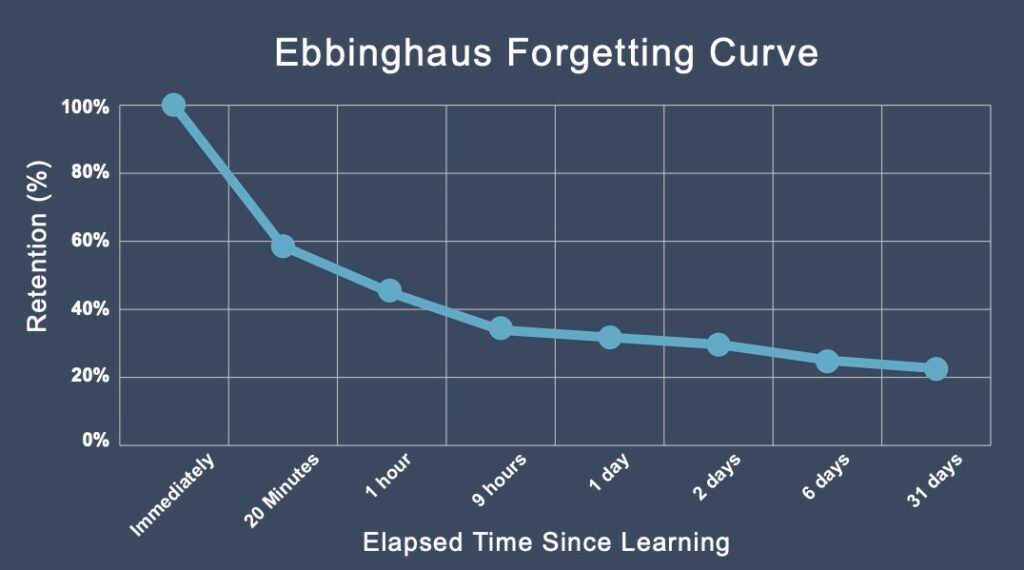
Whatever we learn, we forget. There's no way to avoid that:
--from Scott Alexander, [_A Theoretical "Case Against Education"_](https://www.astralcodexten.com/p/a-theoretical-case-against-education)
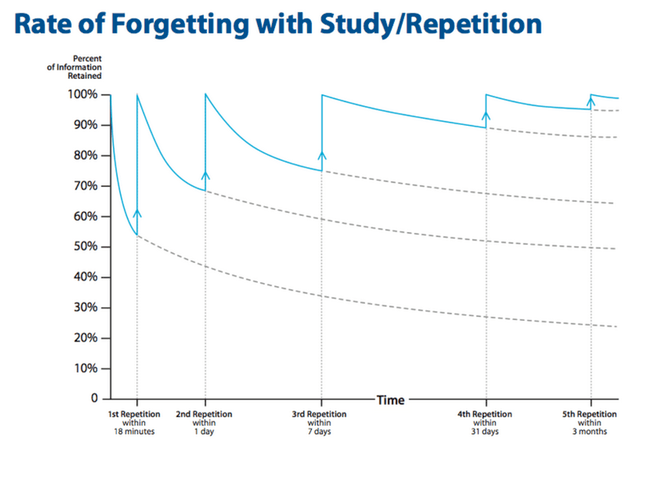
The only way to learn something so that it sticks is to repeat it, regularly, in small amounts.
>The spacing effect demonstrates that learning is more effective when study sessions are spaced out. This effect shows that more information is encoded into long-term memory by spaced study sessions, also known as spaced repetition or spaced presentation, than by massed presentation ("cramming").
>
The phenomenon was first identified by Hermann Ebbinghaus, and his detailed study of it was published in the 1885 book Über das Gedächtnis. Untersuchungen zur experimentellen Psychologie (Memory: A Contribution to Experimental Psychology), which suggests that active recall with increasing time intervals reduces the probability of forgetting information.
--Wikipedia, [_Spacing effect_](https://en.wikipedia.org/wiki/Spacing_effect)
--from Scott Alexander, [_A Theoretical "Case Against Education"_](https://www.astralcodexten.com/p/a-theoretical-case-against-education)
The midrash cites a pasuk from קהלת:
{:he}
>וגדלתי והוספתי מכל שהיה לפני בירושל͏ם; אף חכמתי עמדה לי׃
--קהלת ב:ט
Midrashically, אף חכמתי is taken not as "but my wisdom" but as "the wisdom of my nose":
{:he}
><em>אף חכמתי עמדה לי</em>: אמר רבי חנינא בר פפא: תורה שלמדתי באף--נתקיימה לי.
--ילקוט שמעוני קהלת רמז תתקס״ח
אף in תנ״ך usually indicates anger (as in חרון אף) but here the midrash alludes to (בראשית ג:יט)‎ בזעת אפיך תאכל לחם, translated in King James as "the sweat of your brow".
{:he}
>יתכן דמרמז למה שלמד ביגיעה, וזהו באף: בזעת אף.
--תורה תמימה, קהלת ב:ט
And Rambam actually brings this להלכה. Learning without work isn't learning.
{:he}
>אין דברי תורה מתקימין במי שמרפה עצמו עליהן, ולא באלו שלומדין מתוך עדון ומתוך אכילה ושתיה, אלא במי שממית עצמו עליהן ומצער גופו תמיד ולא יתן שנה לעיניו ולעפעפיו תנומה. אמרו חכמים דרך רמז (במדבר יט:יד) זֹאת הַתּוֹרָה אָדָם כִּי יָמוּת בְּאֹהֶל: אין התורה מתקימת אלא במי שממית עצמו באהלי החכמים. וכן אמר שלמה בחכמתו...אַף חָכְמָתִי עָמְדָה לִּי; חכמה שלמדתי באף היא עמדה לי. אמרו חכמים ברית כרותה שכל היגע בתורתו בבית המדרש לא במהרה הוא משכח...וכל המשמיע קולו בשעת תלמודו תלמודו מתקים בידו. אבל הקורא בלחש במהרה הוא שוכח.
--משנה תורה, הלכות תלמוד תורה ג:יב
The irony is that after the gemara discusses our pasuk and its implications for learning, Rava says his colleagues don't do this. They don't learn in little bits with frequent review.
{:he}
>אמר רבא אמר רב סחורה אמר רב הונא, מאי דכתיב: הוֹן מֵהֶבֶל יִמְעָט וְקֹבֵץ עַל יָד יַרְבֶּה? אם עושה אדם תורתו חבילות חבילות מתמעט, ואם קובץ על יד ירבה.
>
אמר רבא: ידעי רבנן להא מילתא ועברי עלה.
--עבודה זרה יט,א
Rava is telling us that we don't need to feel guilty about learning even if we don't retain it; the מצווה of תלמוד תורה still applies.
{:he}
>ואמר רבא: לעולם ילמד אדם תורה, ואחר כך יהגה, שנאמר (תהילים א:ב): בְּתוֹרַת ה׳ [חֶפְצוֹ], והדר וּבְתוֹרָתוֹ יֶהְגֶּה [יוֹמָם וָלָיְלָה].
>
ואמר רבא: לעולם ליגריס איניש, ואף על גב דמשכח, ואף על גב דלא ידע מאי קאמר, שנאמר (תהילים קיט:כ): גָּרְסָה נַפְשִׁי לְתַאֲבָה,”גרסה“ כתיב ולא כתיב ”טחנה“.
--עבודה זרה יט,א
I can learn Torah with גרסה, coarsely ground, just reading the words once, or I can learn with טחנה, finely ground, going over each detail. Jacob Neusner contrasted /lehrnen/ and learning:
<blockquote lang=en><p>Study of the Torah turns out to constitute a ritual of little study and virtually no torah...</p>
<p>Learning thus forms a labor, not of discovery and testing, but of repetition and revalidation...Learning becomes a process not of discovery but of renewal, not of inquiry and the testing of possibilities but of displaying, in intellectual form, one's loyalty and devotion to the revealed truths of the faith...</p>
<p>To state matters simply, <i lang=yi>lernen</i> and learning have little to do with one another. We teachers aim through teaching to make ourselves obsolete. We want our students to be able to do things on their own...If my students could only repeat what I say, without critical examination and renewal, I should regard my teaching as hopeless...therefore, I have to judge the so-called traditional setting for Jewish learning as worthless, hopeless, and pointless.</p>
<footer class=source>Rabbi Jacob Neusner (1984), <cite>Lehrnen and Learning</cite>, chapter 10 in <a href="https://www.amazon.com/Israel-America-Jacob-Neusner/dp/0807036021"><cite>Israel in America</cite></a>, pp. 133-150 <i lang=la>passim</i></footer></blockquote>
And sociologist Samuel Heilman noted:
<blockquote lang=en><p>From early on I realized that, for many of the Jews I was observing, this experience was more than the assimilation of knowledge. For one thing, many...seemed unable to review the texts on their own...For another, even those who had <i lang=yi>lernt</i> a lot and displayed an erudite familiarity with the texts took apparent great pleasure in repeating what they had already studied rather than looking for the new and yet unknown. The best questions to ask were those the texts themselves asked; and the best if not the only true answers were those already written on the pages before one. Finally...they often spent more time in class getting their feelings about Judaism off their chests. Clearly much more than learning or the accumulation of knowledge of information about Jewish texts was going on.</p>
<footer class=source><a href="https://books.google.com/books?isbn=1351477579">Samuel Heilman, <cite>The People of the Book: Drama, Fellowship, and Religion</cite></a>, p. 2</footer></blockquote>
But as Rabbi Neusner later noted, when we /lehrn/ Torah, we're not really doing it for intellectual reasons.
<blockquote lang=en><p>G-d sings to Israel. The Torah is G-d's song. In secular, descriptive language, in Judaism, G-d is made manifest in the Torah, and it is in the Torah that Israel meets G-d.</p>
...
<p>Go to an academy and stand against the wall and listen to the cacophony, as men young and old shout at each other in animated (also ritualized) argument, and you will soon hear the inner rhythm of the shouts and grasp that they are not yelling at one another but singing to one another. In fact, there is a pattern, a sing-song, not an array of civil arguments, calmly put forth for reasoned argument and decision, but an explosion of violent sound, crescendos of phrases, rivers of words, all of them flowing in a powerful current, deeply felt, sincerely meant: the stakes are high. So the men shout at each other, singing to one another, the chant bearing the signals of the sort of argument that is being mounted, the conventions of thought that are being replayed.</p>
<footer class=source><a href="http://press.uchicago.edu/ucp/books/book/chicago/J/bo3613874.html">Rabbi Jacob Neusner, (1995) <cite>Judaism's Theological Voice: The Melody of the Talmud</cite></a>, pp. 1-10 <i lang=la>passim</i></footer></blockquote>
So yes, הון מהבל ימעט; וקבץ על יד ירבה. That's the reality of the way human beings remember. But כי אם בתורת ה׳ חפצו ובתורתו יהגה יומם ולילה is the way we get closer to G-d.
----
Shlomo continues:
{:he}
>תוחלת ממשכה מחלה לב; ועץ חיים תאוה באה׃
--משלי יג:יב
This is one of those psukim that sound like common proverbs, but that Shlomo will use to his own purposes.
What it means, of course, is that it hurts to want something that we can't have and when we get it, it's like being revived. But the expression עץ חיים echoes two previous psukim:
{:he}
> עץ חיים היא למחזיקים בה; ותמכיה מאשר׃
--משלי ג:יח
{:he}
>פרי צדיק עץ חיים; ולקח נפשות חכם׃
--משלי יא:ל
where עץ חיים is referring to the חכמה of the Torah.
{:he}
>והא אמר רבי חייא בר אבא אמר רבי יוחנן: כל המאריך בתפילתו ומעיין בה, סוף בא לידי כאב לב, שנאמר: תּוֹחֶלֶת מְמֻשָּׁכָה מַחֲלָה לֵב. מאי תקנתיה? יעסוק בתורה, שנאמר: וְעֵץ חַיִּים תַּאֲוָה בָאָה, ואין עץ חיים אלא תורה, שנאמר: עֵץ חַיִּים הִיא לַמַּחֲזִיקִים בָּהּ.
--ברכות לב,ב
תוחלת ממשכה doesn't mean an unfulfilled desire but one that lasts too long; you are spending too much time wanting. The solution is to learn Torah, because עץ חיים תאוה באה, and flip that phrase around: not that a fulfilled desire is a source of life, but the Torah (the עץ חיים) creates desires that will be fulfilled.
You need to be careful what you wish for.
{:he}
>מהבעש"ט פירש (תהלים קמה:יט) רְצוֹן יְרֵאָיו יַעֲשֶׂה וְאֶת שַׁוְעָתָם יִשְׁמַע וְיוֹשִׁיעֵם דקאמר: כבר עשה רצון יראיו, מה צריך עוד לשמוע שועתם להושיעם? ועכל פנים איפכא הוי ליה למימר, ששומע שועתם ורצון יריאיו יעשה.
>
וביאר כי מצינו מדתו ית' ששומע לכל הקוראים אותו הן לטובה או לרעה ח"ו, כמרז"ל (ברכות סג,א) גנבא אפום מחתרתא רחמנא קרי...וכי תאמר אם כן מה הפרש יש בין צדיק לרשע וביאר כי יש הפרש גדול ביניהם כי הגנב נשמע תפלתו שיוכל לגנוב ואח"כ שנתפס על גניבתו חוזר וקורא לו ית' שוב לא נענה מאחר שבחר בזה. משא"כ הצדיק המתפלל על איזה דבר גם שיודע ה' שאין זה לטובתו מכל מקום ה' עושה מבוקשו וזה שכתב רְצוֹן יְרֵאָיו יַעֲשֶׂה ואח"כ כשרואה שאין זה לטובה חוזר וקורא אל ה' ואז ברחמיו ית' שועתם יִשְׁמַע וְיוֹשִׁיעֵם מכל מקום.
--כתר שם טוב א:קטו
This goes back to virtue ethics: being a good person means you will do good things, and here, you will want good things. The things you desire will be an עץ חיים.
----
And so
{:he}
>בז לדבר יחבל לו; וירא מצוה הוא ישלם׃
--משלי יג:יג
We've talked about being a חריץ, taking things seriously. Here Shlomo reminds us to
take Torah seriously so your desires and aims will help you, not hurt you.
{:he}
><em>בז לדבר יחבל לו</em>: הבוזה אחד מדברי תורה, סוף מתמשכן עליו.
>
<em>וירא מצוה הוא ישלם</em>: יקבל שכר.
--רש״י, משלי יג:יג
But in וירא מצוה הוא ישלם, the word מצוה is singular. Shlomo is making our job easier: you just need to take one מצווה seriously to achieve שלימות.
{:he}
>רבי חנניא בן עקשיא אומר: רצה הקדוש ברוך הוא לזכות את ישראל, לפיכך הרבה להם תורה ומצות, שנאמר (ישעיה מב:כא) ה׳ חָפֵץ לְמַעַן צִדְקוֹ יַגְדִּיל תּוֹרָה וְיַאְדִּיר.
--משנה מכות ג:טז
{:he}
>המצות שנתן השם יתברך לישראל, יש לשאול עליהם: אם רבוי המצות לטוב להם כמשמעות פשט הכתוב, שנאמר (דברים ו:כד-כה) וַיְצַוֵּנוּ ה׳ לַעֲשׂוֹת אֶת כׇּל הַחֻקִּים הָאֵלֶּה...לְטוֹב לָנוּ כׇּל הַיָּמִים...וּצְדָקָה תִּהְיֶה לָּנוּ וגו'...כך מוכח פשט המאמר המפורסם ”אמר רבי חנניה בן עקשיא, רצה הקב"ה לזכות את ישראל לפיכך הרבה להם תורה ומצות...“. ומעתה יש לשאול, כי איך יאמר שה׳ חפץ לזכות את ישראל לכך הרבה להם מצות? ודבר זה נגד השכל, שהיה לו למעט במצות, כדי שלא יהיה צריך לשמור הרבה מצות, ואז היה זוכה לעולם הבא על ידי מיעוט מצות, ממה שהוא מוסיף להם מצות, שאז אי אפשר לזכות כל כך לעולם הבא.
>
והרמב"ם ז"ל פירש במסכת מכות (בפירוש המשניות שם), וזה לשונו: מעיקרי האמונה בתורה כי כשיקיים אדם מצוה מן תרי"ג מצות כראוי וכהוגן, ולא שתף עם כונתה מכונות העולם, אלא שיעשה אותה מאהבה כמו שביארתי לך, הנה זכה לחיי עולם. ועל זה אמר רבי חנניא כי המצות בהיותם הרבה, אי אפשר שלא יעשה האדם בחייו אחת מהנה על מתכונתה ועל שלימותה. ובעשיית אותה המצוה תחיה נפשו באותו מעשה. וממה שיורה על עיקר זה, מה ששאל רבי חנינא בן תרדיון (עבודה זרה יח,א) ”מה אני לחיי עולם הבא?“, והשיב המשיב ”כלום מעשה בא לידך“ , כלומר עשית מצוה כהוגן. והשיב כי נזדמנה לו מצות צדקה על השלימות, וזכה בה לחיי עולם הבא, עד כאן דבריו.
--מהר"ל, תפארת ישראל ה
So we are left with a balance; an ideal of learning and acting, but the reality that such an ideal is aspirational but we can't expect to be perfect. But without the goal, we would achieve nothing.
{:.lines}
>“Would you tell me, please, which way I ought to go from here?”
“That depends a good deal on where you want to get to,” said the Cat.
“I don’t much care where–” said Alice.
“Then it doesn’t matter which way you go,” said the Cat.
--Lewis Carrol, _Alice in Wonderland_, [Chapter 6](https://www.alice-in-wonderland.net/resources/chapters-script/alices-adventures-in-wonderland/chapter-6/)