There's a classic computer joke:
>There are two hard things in computer science: cache invalidation, naming things, and off-by-one errors.
--Reddit user sublimefunk, [ProgrammerHumor](https://www.reddit.com/r/ProgrammerHumor/comments/p1gi4j/there_are_two_hard_things_in_computer_science/)
An “off-by-one” error, also called a “fencepost error”, isn't just counting things wrong; it is confusing counting with measuring:
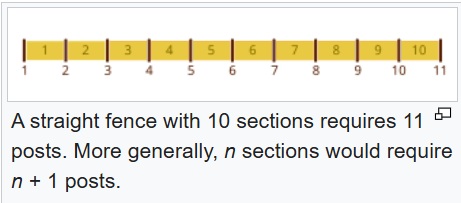
--Wikipedia, [_Off-by-one error_](https://en.wikipedia.org/wiki/Off-by-one_error), accessed 2026-02-15
There's an apparent example of an off-by-one error in this week's parsha:
{:he}
><b>ט</b> ועשית את חצר המשכן לפאת נגב תימנה קלעים לחצר שש משזר מאה באמה ארך לפאה האחת׃ <b>י</b> ועמדיו עשרים ואדניהם עשרים נחשת; ווי העמדים וחשקיהם כסף׃ <b>יא</b> וכן לפאת צפון בארך קלעים מאה ארך; ועמדו עשרים ואדניהם עשרים נחשת ווי העמדים וחשקיהם כסף׃ <b>יב</b> ורחב החצר לפאת ים קלעים חמשים אמה; עמדיהם עשרה ואדניהם עשרה
--שמות פרק כז
{:he}
><em>ועמדיו עשרים</em>: חמש אמות בין עמוד לעמוד.
--רש״י, שמות כז:י
The problem of course is that the southern wall of the חצר is 100 אמות, and there are 20 עמודים, then there are 19 gaps and so there are 100÷19 = 5.26 אמות from עמוד to עמוד. Rashi certainly knew how to calculate with fractions (look at his calculations for pro-rating prices based on the years until יובל). You could say that Rashi simply was rounding down, but Maharal says that actually there were *21* עמודים on the south wall; the twenty-first one was the southern most עמוד of the west wall.
{:he}
><em>חמש אמות בין עמוד לעמוד</em>: אף על גב דעשרים עמודים יש בהם י"ט אוירים בלבד, ואיך יתכן לומר שהיו חמש אמות בין עמוד לעמוד, מכל מקום העמוד הראשון שהוא בסדר המערב משלים לכ' אוירים.
--גור אריה, שמות כז:י
And that is the solution that Artscroll uses:
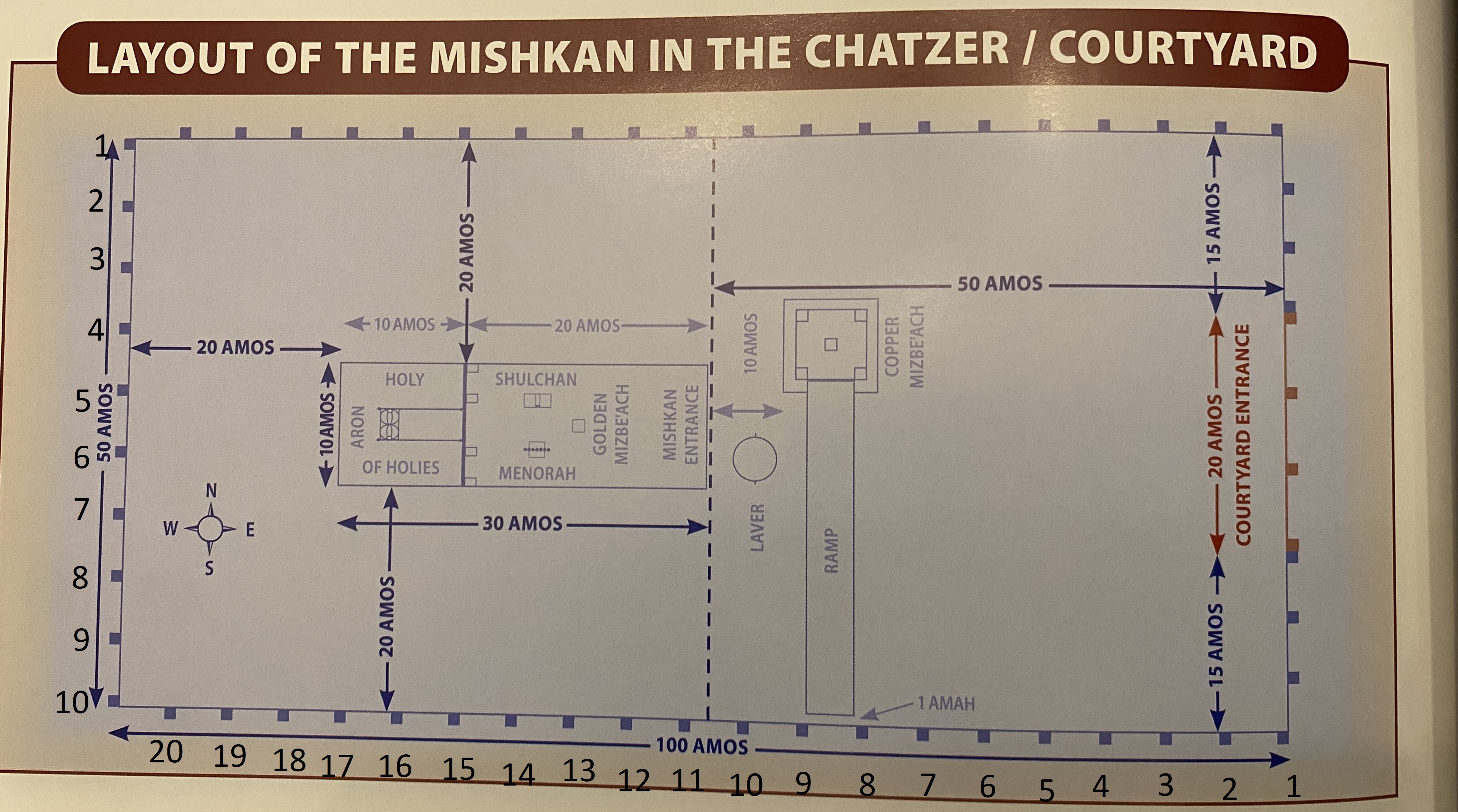
--[_The Book of Torah Timelines, Charts and Maps_](https://www.artscroll.com/Books/9781422640647.html), p. 74
That gives 5 אמות between עמודים on the north and south walls, but on the west wall there are 9 עמודים, or
50÷9 = 5.56 אמות between the עמודים on the west, but that's not a problem for Rashi because he only mentions the 5 אמות between עמודים for the north and south edges.
Again, we get off-by-one errors when we count the points rather than the spans between them.
----
That was all introduction. There's another apparent off-by-one error that is relevant to our parsha:
{:he}
>רבי שמעון אומר: שלשה כתרים הם: כתר תורה וכתר כהנה וכתר מלכות. וכתר שם טוב עולה על גביהן.
--משנה אבות ד:יג
We talked about this three yearas ago in <// פרשת תרומה תשפ״ג>. This year I will take a different approach. The three crowns mentioned in the mishna correspond to the three crowns on the furniture of the משכן.
{:he}
>אמר רבי יוחנן: שלשה זירים הן, של מזבח ושל ארון ושל שלחן..
--יומא עב,ב
{:he}
><b>א</b> ועשית מזבח מקטר קטרת; עצי שטים תעשה אתו׃ <b>ב</b> אמה ארכו ואמה רחבו רבוע יהיה ואמתים קמתו; ממנו קרנתיו׃ <b>ג</b> וצפית אתו זהב טהור את גגו ואת קירתיו סביב ואת קרנתיו; *ועשית לו זר זהב* סביב׃
--שמות פרק ל
The מזבח is obviously a symbol of כהנה.
{:he}
><b>י</b> ועשו ארון עצי שטים; אמתים וחצי ארכו ואמה וחצי רחבו ואמה וחצי קמתו׃ <b>יא</b> וצפית אתו זהב טהור מבית ומחוץ תצפנו; *ועשית עליו זר זהב* סביב׃
--שמות פרק כה
The ארון, with the לוחות, is the symbol of תורה.
{:he}
><b>כג</b> ועשית שלחן עצי שטים; אמתים ארכו ואמה רחבו ואמה וחצי קמתו׃ <b>כד</b> וצפית אתו זהב טהור; *ועשית לו זר זהב* סביב׃
--שמות פרק כה
The connection to מלכות is less obvious, but the table is a symbol of sustenance, the role of government.
{:he}
><em>זר זהב</em>: סימן לכתר מלכות, שהשלחן שם עשר וגדלה, כמו שאומרים שלחן מלכים.
--רש״י, שמות כה:כד
And those three "crowns" correspond to the three things that sustain the world:
{:he}
>שמעון הצדיק...היה אומר: על שלשה דברים העולם עומד: על התורה ועל העבודה ועל גמילות חסדים.
--משנה אבות א:ב
>[T]o take a larger view, the three crowns in our text correspond to the three modes of our religious life on which the world is said to be based....For, as we have indicated, the crown of the /cohen/ clearly relates to the realm of /avodah/, Divine service and worship, while the crown of royalty represents the rule of a benign order among men, that requires the charity and mercy of /g'miluth hassadim/.
--Irving M. Bunim, [_Ethics from Sinai_](https://www.feldheim.com/ethics-from-sinai-a-wide-ranging-commentary-on-pirkei-avos-1), vol. 2, p. 123.
You wear the metaphoric crown when you sustain the world through one of those three things. So what is that fourth of the three crowns, the כתר שם טוב? Maharal asks this question, and adds that there is a fourth article in the משכן, and it does not have a זר זהב:
{:he}
><em> אומר ג' כתרים הם וכו'</em>: יש לשאול, מה שאמר ”ג׳ כתרים“, ולמה לא אמר ”ד׳ כתרים“? ועיקר הכתר, שהוא כתר שם טוב, לא חשיב.
>
ועוד קשה, במקדש היה כנגד כל הכתרים כלי, מרמז על כל כתר וכתר...ואילו כנגד כתר שם טוב, שהוא על כל הכתרים, לא היה במקדש...
>
כל שכן, הרי לא היה כתר על המנורה, והיה ראוי להיות כתר על המנורה.
>
וזה יש ליישב, כי הנרות היו עולים למעלה עוד, כדכתיב (שמות כז:כ) לְהַעֲלֹת נֵר תָּמִיד, ולפיכך אי אפשר להיות כתר על המנורה, כיון שהנר היה עולה למעלה מן הזר, אם היה זר...
--מהר״ל, דרך חיים ד:יג
So this fourth "crown", the כתר שם טוב, is a virtual crown formed by the flickering flames of the מנורה. What is a שם טוב? It's the good reputation you get by doing מצוות:
{:he}
>כל זמן שאדם מרבה במצות, הוא קונה שם טוב לעצמו.
--מדרש תנחומא א:כב
{:he}
>ובמדרש רבות אמרו בפרשת נשא (במדבר רבה יד: י) כי המנורה מרמז כתר שם טוב,
כי שם טוב הוא אל מי שהוא בעל מצוה, וזהו המנורה, (משלי ו:כג) כִּי נֵר מִצְוָה וְתוֹרָה אוֹר, ולפיכך המנורה הוא מורה על כתר שם טוב. ואתי שפיר מה שאמר ”וכתר שם טוב עולה על גביהן“, כי המנורה גם כן היא על כל אלו שלשה כלים.
--מהר״ל, דרך חיים ד:יג
And it is different from the other "crowns" because it does not represent something that you accomplish for yourself. It represents how others see you.
{:he}
>ועוד, אין ראוי שיהיה כתר למנורה, כי הכתר הזאת משונה מן שאר הכתרים. כי שאר הכתרים, המעלה נמצא בבעל הכתר עצמו; כי התורה הוא בבעל התורה, וכן הכהונה, וכן המלכות, הכל נראה ונרגש בבעל הכתר. אבל בעל שם טוב, אין השם טוב נמצא בבעל שם טוב, כי...אשר יש לו אצל אחרים. ולפיכך אין ראוי שיהיה הכתר במנורה...כי כתר זאת של שם טוב היא נמצאת אצל אחרים, לא אצל בעל השם טוב.
--מהר״ל, דרך חיים ד:יג
The כתר שם טוב is not the מצוות that you do; it is how others see the מצוות that you do. You can't achieve תורה כהנה ומלכות, or תורה עבודה וגמילות חסדים, without having a שם טוב: you have to care about how your actions affect others. It is a mistake to see those שלשה כתרים as goals. That's an off-by-one error. Don't count the points; count the edges. The שלשה כתרים are three *paths* to serving ה׳, and each of them starts from שם טוב: how do our actions affect others.
{:he}
><em>וכתר שם טוב עולה על גביהן</em>: ר"ל ולכתרים כלם צריך כתר שם טוב.
--רבינו יונה, משנה אבות ד:יג
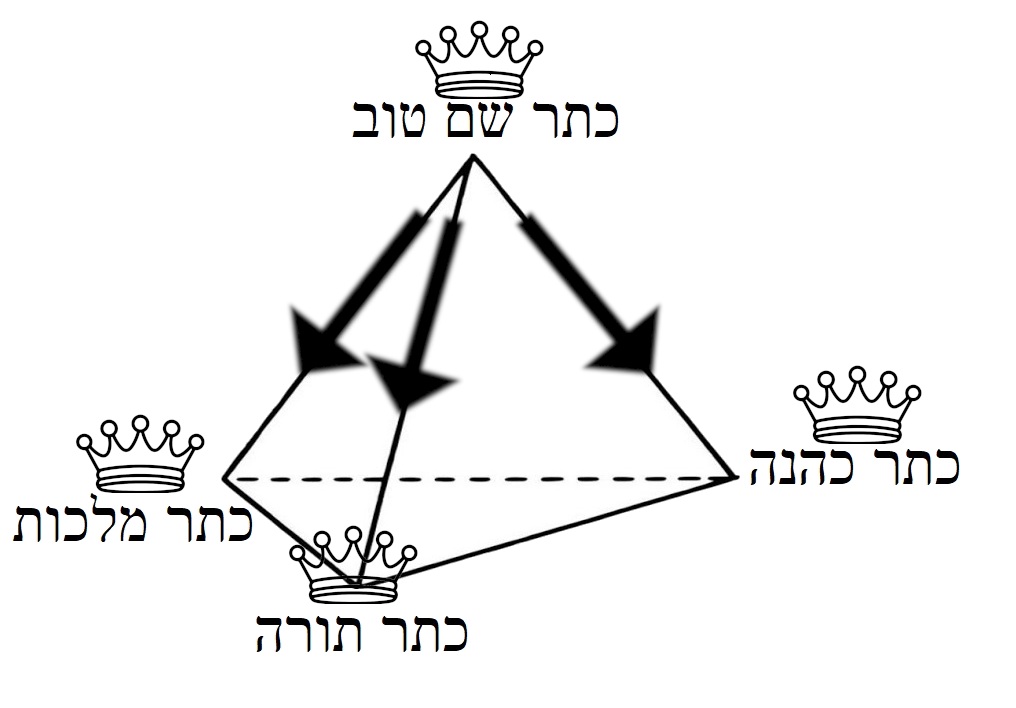
--adapted from https://i.ytimg.com/vi/cfehrVbyp74/maxresdefault.jpg
{:he}
>וקשיא עוד, דאם המנורה היא מורה כתר שם טוב, ומאחר שכתר שם טוב עולה על גביהן, למה המנורה אינה בקדש הקדשים, כמו הארון שהוא לפני ולפנים. וגם זה אינו קשה, כי לכך לא היתה המנורה לפני ולפנים, כדתנן כי (משנה אבות ג:ט) כל שחכמתו קודמת למעשיו, אין חכמתו מתקיימת. וכל שמעשיו קודמת לחכמתו, חכמתו מתקיימת. ולפיכך *קודם* המנורה המורה על המעשה, ואחר כך הוא מגיע אל הארון לפני ולפנים.
--מהר״ל, דרך חיים ד:יג
It's easy to be a צדיק if I don't care about others.
{:he}
>אמר רבא: רב אידי אסברא לי (ישעיהו ג:י): אִמְרוּ צַדִּיק כִּי טוֹב כִּי פְרִי מַעַלְלֵיהֶם יֹאכֵלוּ. וכי יש צדיק טוב ויש צדיק שאינו טוב? אלא: טוב לשמים ולבריות--זהו צדיק טוב, טוב לשמים ורע לבריות--זהו צדיק שאינו טוב.
--קידושין מ,א
Even גמילות חסדים, the כתר מלכות, can be done without concern for the other and can be a צדקות לא טוב.
>To bestow pity is tantamount to contempt.
--Friedrich Nietzsche, [_The Dawn of Day_](https://en.wikisource.org/wiki/Dawn_of_the_Day/Book_2), Book II, Aphorism 135
{:he .lines}
>הוא היה אומר, כל שרוח הבריות נוחה הימנו, רוח המקום נוחה הימנו.
וכל שאין רוח הבריות נוחה הימנו, אין רוח המקום נוחה הימנו.
--משנה אבות ג:י
The very furniture of the משכן hints at the truth taught by the sage Bart Simpson:
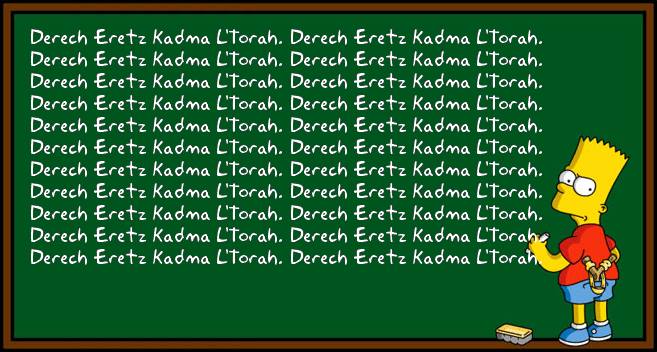
--Illustration from Sarah Meira Rosenberg, in [Tablet Magazine](https://www.tabletmag.com/sections/news/articles/this-3000-member-facebook-group-discusses-judaism-seriously-what-is-its-secret)