This is a re-presentation of <//פרשת נח תשע״ט>.
Our parsha is bookended by two tales of destruction: the flood, and the tower of Babel. We know the stories. The generation of the flood was evil, so ה׳ wiped them out:
{:he}
><b>ה</b> וירא ה׳ כי רבה רעת האדם בארץ וכל יצר מחשבת לבו רק רע כל היום׃ <b>ו</b> וינחם ה׳ כי עשה את האדם בארץ; ויתעצב אל לבו׃ <b>ז</b> ויאמר ה׳ אמחה את האדם אשר בראתי מעל פני האדמה מאדם עד בהמה עד רמש ועד עוף השמים; כי נחמתי כי עשיתם׃ <b>ח</b> ונח מצא חן בעיני ה׳׃...
>
<b>יג</b> ויאמר אלקים לנח קץ כל בשר בא לפני כי מלאה הארץ חמס מפניהם; והנני משחיתם את הארץ׃...<b>יח</b> והקמתי את בריתי אתך; ובאת אל התבה אתה ובניך ואשתך ונשי בניך אתך׃
--בראשית פרק ו
And the generation of the tower did--*something*--and ה׳ made them speak different languages.
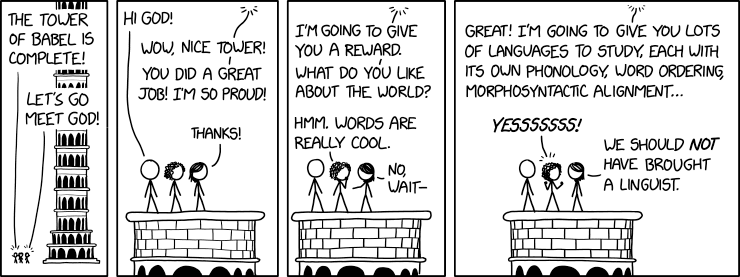
--xkcd, [_Tower of Babel_](https://xkcd.com/2421/)
{:he}
><b>א</b> ויהי כל הארץ שפה אחת ודברים אחדים׃
<b>ב</b> ויהי בנסעם מקדם; וימצאו בקעה בארץ שנער וישבו שם׃
<b>ג</b> ויאמרו איש אל רעהו הבה נלבנה לבנים ונשרפה לשרפה; ותהי להם הלבנה לאבן והחמר היה להם לחמר׃
<b>ד</b> ויאמרו הבה נבנה לנו עיר ומגדל וראשו בשמים ונעשה לנו שם; פן נפוץ על פני כל הארץ׃
<b>ה</b> וירד ה׳ לראת את העיר ואת המגדל אשר בנו בני האדם׃
<b>ו</b> ויאמר ה׳ הן עם אחד ושפה אחת לכלם וזה החלם לעשות; ועתה לא יבצר מהם כל אשר יזמו לעשות׃
<b>ז</b> הבה נרדה ונבלה שם שפתם אשר לא ישמעו איש שפת רעהו׃
<b>ח</b> ויפץ ה׳ אתם משם על פני כל הארץ; ויחדלו לבנת העיר׃
<b>ט</b> על כן קרא שמה בבל כי שם בלל ה׳ שפת כל הארץ; ומשם הפיצם ה׳ על פני כל הארץ׃
--בראשית פרק יא
This sounds like a [“Just So Story”](https://www.gutenberg.org/files/32488/32488-h/32488-h.htm): “Why People Speak Different”.
But the Torah doesn't tell Just So Stories; we have no other narratives that exist just to let us know why the world is the way it is; if the origin of a practice is mentioned, it is incidental to the narrative (like clothing, or the גיד הנשה). So what do we do with this? The most powerful way of reading this parsha (often brought by Rabbi Sacks) is as an essay on political philosophy.
Political philosophers have a model of human history that starts with small bands of hunter-gatherers who don't have formal laws any more than dog packs or chimpanzee troops do; this is called "The State of Nature". Then something happens and larger groups form, and they need rules and systems, and so civilization is invented. The great argument is whether that was a good thing or not.
Thomas Hobbes (17th century England), looked at the violence and chaos of the English civil war and famously said:
>Life in the State of Nature is “nasty, brutish and short.”
--[paraphrased from Thomas Hobbes, _Leviathan_](http://www.sparknotes.com/philosophy/leviathan/terms.html)
>Hobbes’s answer to the State of Nature is the immediate establishment of a Leviathan: a single sovereign with absolute political authority. The Leviathan is executive, legislature and judiciary, all rolled into one: he is where the buck stops. Hobbes supports dictatorship because he believes there is no viable alternative. Anything short of absolutism is prone to disintegrate back into anarchy: if the buck doesn’t stop somewhere, the branches of the state that claim a share of sovereignty are doomed to fight for overall control. And *anything* is better than an “earth… filled with violence”: even tyranny.</p>
--Eylon A. Levy, [_The Flood, the Tower of Babel and the State of Nature_](https://blogs.timesofisrael.com/the-tower-of-babel-and-the-birth-of-civil-society/)
(A little irony that last week we said that לויתן was the symbol in תנ״ך of chaos, and here it's a metaphor for absolute order).
Jean-Jacques Rousseau (18th century Switzerland) felt that civilization led to man's estrangement from each other and to tyranny, and that was a bad thing:
>Rousseau’s state of nature is a far cry from Hobbes’ portrayal of a brutish, warlike existence. According to Rousseau, early humans, whom he referred to as “noble savages,” lived a peaceful and solitary life. These individuals were driven primarily by basic needs such as food, shelter, and safety. Unlike Hobbes’ characterization, Rousseau’s humans were not engaged in constant conflict; instead, they coexisted with minimal interaction, driven by natural pity and empathy for one another.
--PolSci Institute, [_Rousseau’s State of Nature: The Noble Savage_](https://polsci.institute/modern-political-philosophy/rousseaus-state-of-nature-noble-savage/)
And that attitide continues to have adherents today; see Jared Diamond's [_The Worst Mistake in the History of the Human Race_](https://www.discovermagazine.com/the-worst-mistake-in-the-history-of-the-human-race-12157) and James C. Scott's [_Seeing Like a State_](https://yalebooks.yale.edu/book/9780300078152/seeing-like-a-state/).
It seems clear what the Torah's perspective is: דור המבול *is* the state of nature. And that nature, their יצר, is רק רע כל היום. So ה׳ restarts history מידה כנגד מידה, by bringing the water, that symbol of formless chaos, to wipe them out.
And so the descendants of the survivors form a Leviathan. ויהי כל הארץ שפה אחת ודברים אחדים doesn't mean "one language"; it means "a common understanding":
{:he}
>...על ידי גודל האחדות ששרה ביניהם הבין כל אחד כוונתו ורצונו של חבירו, כמו ”שפת“ התינוק שמובנת להוריו...והנה על ידי התאחדותם נתהוו כמשפחה אחת גדולה, ונפלה עצה ביניהם שכל אחד יקדיש כל מעשיו ופעולותיו לטובת הכלל...שעל ידי השותפות של כל בני אדם יש לאל ידם להתגבר על כל צרה שלא תבוא...
--רב שמעון שוואב, מעין בית השואבה, נח יא:א
It seems like a good thing.
{:he}
>וכי אי זו קשה, של דור המבול או של דור הפלגה, אלו לא פשטו יד בעיקר, ואלו פשטו יד בעיקר כביכול להלחם בו, ואלו נשטפו, ואלו לא נאבדו מן העולם. אלא שדור המבול היו גזלנים והיתה מריבה ביניהם לכך נאבדו, ואלו היו נוהגים אהבה וריעות ביניהם, שנאמר שפה אחת ודברים אחדים. למדת ששנוי המחלוקת וגדול השלום.
Being a single family, כמשפחה אחת, works for small groups like chimp troops, but as the group gets larger (Robin Dunbar, a British anthropologist, estimates the number of social interactions a human being can handle as about [150](https://en.wikipedia.org/wiki/Dunbar%27s_number)) you need rules and heirarchy. And that leads to [Rousseau's problem](https://polsci.institute/modern-political-philosophy/rousseaus-state-of-nature-noble-savage/#the-journey-from-nature-to-society): “humans became driven by pride, envy, and competition, leading to inequality and conflict”.
The Netziv (who lived under Tsarist Russia and knew what a despot was) connects this text to the previous narrative that mentions the story of בבל and שנער:
{:he}
><b>ח</b> וכוש ילד את נמרד; הוא החל להיות גבר בארץ׃
<b>ט</b> הוא היה גבר ציד לפני ה׳; על כן יאמר כנמרד גבור ציד לפני ה׳׃
<b>י</b> ותהי ראשית ממלכתו בבל וארך ואכד וכלנה בארץ שנער׃
--בראשית פרק י
And this, the first government, is important:
{:he}
>רבי חנינא סגן הכהנים אומר: הוי מתפלל בשלומה של מלכות, שאלמלא מוראה, איש את רעהו חיים בלעו...
--משנה אבות ג:ב
{:he}
><em>להיות גבור בארץ</em>: ממנו החל ענין מלוכה להתגבר ולשור על אנשים. ובאמת היה כך רצון ה׳ וזהו קיום העולם. ”שאלמלא מוראה...איש את רעהו חיים בלעו“ והיה נמרוד המתחיל לעשות כזה והיינו דכתיב:
>
<em>גבור ציד לפני ה׳</em>: שבזה השלים בגבורתו רצון ה׳ ומיקרי עבד ה׳ כמו נבוכדנצר הרשע שנקרא (ירמיהו כה:ט) עַבְדִּי. ואע״ג שהרשיע לעשות בכל זה משום שהיה שבט אפו של הקב״ה ובו השלים הקב״ה רצונו משום הכי נקרא עבד ה׳. וכך היה נמרוד הרשע.
>
<em>על כן יאמר</em>: על איש שהוא רשע ומכל מקום מעשיו רצוים לפניו ית׳. וזהו דבר פלא וחידוש ונאמר על איש כזה. כנמרוד גבור ציד לפני ה׳.
--חומש העמק דבר, בראשית י: ח-ט
And he sees מגדל בבל as a panopticon:
>The panopticon is a design of institutional building with an inbuilt system of control, originated by the English philosopher and social theorist Jeremy Bentham in the 18th century. The concept is to allow all prisoners of an institution to be observed by a single prison officer, without the inmates knowing whether or not they are being watched.
--Wikipedia, [_Panopticon_](https://en.wikipedia.org/wiki/Panopticon)
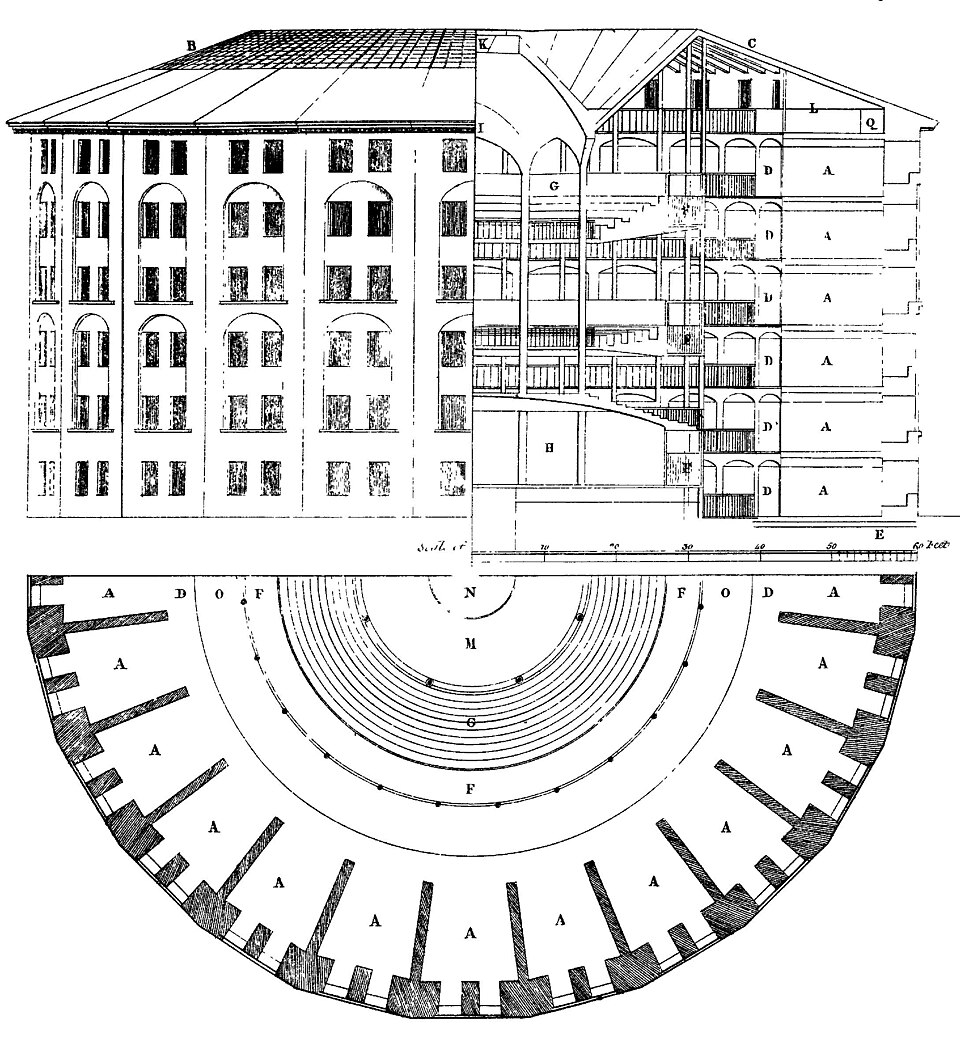
--<a href="https://en.wikipedia.org/wiki/en:Jeremy_Bentham" class="extiw" title="w:en:Jeremy Bentham"><span title="British philosopher, jurist, and social reformer (1748–1832)">Jeremy Bentham</span></a>--The works of Jeremy Bentham vol. IV, 172-3, Public Domain, <a href="https://commons.wikimedia.org/w/index.php?curid=3130497">Link</a>
And explains what the tower was for:
{:he}
><em>וראשו בשמים</em>: זה ודאי לא יעלה עה״ד שיהיה עיר אחת לכל העולם אלא כסבורים שיהיו כל הערים סמוכות וטפלות לאותו העיר שבה המגדל ויהיה המגדל לצפות ממנו למרחוק אחר כל הישוב שלהם שלא יהיו נפרדים בארץ אחרת. ע״כ נצרך שיהיה ראשו בשמים.</p>
>
<em>ונעשה לנו שם</em>: אנשים משגיחים וממונים על הדבר ויהיו שרי צבא להעניש את העובר. דבל״ז אינו מועיל המגדל. כ״ז היה לחשש.
>
<em>פן נפוץ על פני כל הארץ</em>: אמנם יש להבין מה חששו אם יצאו כמה לארץ אחרת. ומובן שזה היה שייך לדברים אחדים שהיה ביניהם ובאשר אין דעות ב״א שוים חששו שלא יצאו ב״א מדעה זו ויהיו במחשבה אחרת ע״כ היו משגיחים שלא יצא איש מישוב שלהם. ומי שסר מדברים אחדים שביניהם היה משפטו לשריפה כאשר עשו לאברהם אגינו. נמצא היו דברים אחדים שביניהם לרוע, שהחליטו להרוג את מי שלא יחשוב כדעתם...
--חומש העמק דבר, בראשית יא:ד
And the אחדות that was the only way to preserve society from the anarchy of דור המבול becomes the tyranny that would destroy the דור ההפלגה.
{:he}
><em>ועתה לא יבצר מהם כל אשר יזמו לעשות</em>:...וזהו דבר רצח ושוד המשחית את הישוב לגמרי ולזה לא מועיל מה שכעת המה מתאחדים בדעה.
--חומש העמק דבר, בראשית יא:ו
>Everything within the state, nothing outside the state, nothing against the state.
--[Benito Mussolini](https://en.wikiquote.org/wiki/Benito_Mussolini)
So while the tower and the dictatorship that it represented was a response to the chaos of דור המבול, it was a case of the pendulum swinging too far. They prevented individuals from becoming evil by making the state the ultimate evil. And ה׳'s response to that was to destroy the אחדות:‎ בלל ה׳ שפת כל הארץ. This is the introduction to Avraham the iconoclast who will spread the message, not only of monotheism, but of *ethical* monotheism:
<blockquote lang=he><p>עשרה דורות מאדם ועד נוח, להודיע כמה ארך אפיים לפניו, שכל הדורות היו מכעיסין לפניו, עד שהביא עליהם את מי המבול. עשרה דורות מנוח ועד אברהם, להודיע כמה ארך אפיים לפניו, שכל הדורות היו מכעיסין ובאין, עד שבא אברהם אבינו וקיבל שכר כולם.</p>
<footer class=source>משנה אבות ה:ב</footer></blockquote>
The law must exist, but it must exist to serve a higher ethical purpose.
>Abraham not only discovered G-d behind the laws of physics; his
monotheism was ethical and taught the law of /hesed/. This is apparently
crucial. The story of Abraham’s open tent, his welcoming of the three
different, dusky men, is inherent to the monotheism preached on the
philosophical and metaphysical level. “He rebelled against paganism not
only because he resented untruth and erroneous thinking but also for the
sake of substituting an ethical life for an immoral one. The Torah hated
idolatry because it represented an ugly life, a cruel and vulgar approach to
one’s fellow man.”
--Gerald J. Blidstein, [_Rabbi Soloveitchik’s Abraham_](https://traditiononline.org/wp-content/uploads/2018/09/0018-0023.pdf), quoting Joseph B. Soloveitchik, [_Abraham’s Journey: Reflections on the Life of the Founding Patriarch_](https://ktav.com/products/abraham-s-journey), pp. 46-47
The Torah's political philosophy is a dialectic between anarchy and tyranny that is synthesized by חסד.