This is a re-presentation of <//פרשת חיי שרה תשע״ז>. This week's parsha introduces the search for a shidduch for Yitzchak with a statement about his father: {:he} >ואברהם זקן בא בימים; וה׳ ברך את אברהם בכל׃</p> --בראשית כד:א Notice also that ה׳ ברך is the *past perfect*--G-d *had blessed* Abraham. ויברך ה׳ would be "G-d blessed". This is describing something that already happened, and presumably is what leads to the next story, finding a wife for Yitzchak. {:he} ><em>בכל</em>: לא חסר דבר ולא היה לו דבר צורך בעולם הזה אלא להשיא אשה לבנו יצחק הראוי לו. --רד״ק, בראשית כד:א The Ibn Ezra starts with the פשט interpretation, then adds a comment about a דרש: {:he} ><em>וה׳ ברך את אברהם בכל</em>: באורך ימים ועושר וכבוד ובנים, וזו כל חמדת האדם. > ודרש שבתו היתה שמה ”בכל“ צריך להוסיף בי״ת משרת. --אבן עזרא, בראשית כד:א He's saying the derash can't be right, because it should say "בבכל" if בכל is the name of Abraham's daughter. What is he talking about? {:he .lines} ><em>וה׳ ברך את אברהם בכל</em>: מאי בכל? רבי מאיר אומר: שלא היתה לו בת. רבי יהודה אומר: שהיתה לו בת. אחרים אומרים: בת היתה לו לאברהם, ו”בכל“ שמה. --בבא בתרא טז,ב רבי יהודה's interpretation is close to פשט: we already know that Avraham had wealth, power and fame. So what does ברך...בכל add? What greater blessing could a man ask for than to have a daughter? >A son is a son 'til he gets a wife, but a daughter is a daughter all her life. --Emily Giffin, [_Love the One You're With_](https://www.goodreads.com/quotes/66296-a-son-is-a-son-til-he-gets-a-wife) רבי מאיר also offers a פשט-ish interpretation, but points out that the social reality of the ancient near east isn't that good for daughters. “A daughter is a daughter all her life” may be true in 21st century America, but it wasn't always like that. {:he} >דרש רבי מאיר שלא היתה לו בת לאברהם, וזו לו לברכה. כי לא היה יכול להשיאה רק לבני כנען הארורים, ואם ישלחנה לארצו גם כן תעבוד שם עבודה זרה כמותם, *כי האשה ברשות בעלה*. ואברהם לא יחפוץ שיצא זרעו הכשר משרה אשתו חוצה לארץ ואף כי יעבוד עבודה זרה. --רמב"ן, בראשית כד:א A daughter would marry out, and their descendants would be lost to the Jewish people. It was *more* of a ברכה to not have a daughter in the first place. But what about our anonymous אחרים who tell us בת היתה לו לאברהם, ובכל שמה? It certainly seems like an outlandish aggadah. What's the deal with the name? Ramban takes Ibn Ezra to task for "mocking" it: {:he} >ואילו ידע זה המתהדר בסודותיו, תאלמנה שפתיו מהלעיג על דברי רבותינו, ולכן כתבתי זה לסכור פי הדוברים על הצדיקים עתק... > ובאו אחרים והזכירו שם הבת. ובאמת שאין הכוונה לאחרים והמחלוקת להם עם רבי יהודה להודיע אותנו שם הבת הזאת בלבד, וחלילה להם שיוציאו ברכתו של אברהם שהיא גדולה וכללית לענין זה, שיאמר הכתוב כי ברך אתו השם בבת אחת ששמה כך. אבל אחרים חדשו בפירוש הכתוב הזה ענין עמוק מאד ודרשו בזה סוד מסודות התורה. --רמב"ן, בראשית כד:א Now, the Artscroll translation drops it here: >Ramban continues to elaborate on the deep Kabbalistic concept alluded to by the "Others" mentioned in the Talmud. This part of Ramban's comment is beyond the scope of this elucidation. --[Artscroll Ramban](https://www.artscroll.com/Books/9781422610435.html), Breishis 24:1 But I'm going to try to read the Ramban and see what we can understand. >Fools rush in where Angels fear to tread. --Alexander Pope, [_An Essay on Criticism_](https://www.poetryfoundation.org/articles/69379/an-essay-on-criticism) I'm not a mystic. I understand these סודות התורה as semiotics, not mysticism. These concepts mean something to us and are relevant to our lives. Let's see what the Ramban says: {:he} >ואמרו כי ”בכל“ תרמוז על ענין גדול, והוא שיש להקב״ה מדה תקרא ”כל“, מפני שהיא יסוד הכל, ובה נאמר (ישעיה מד:כד) אָנֹכִי ה׳ עֹשֶׂה כֹּל... --רמב"ן, בראשית כד:א There is a מדה called "כל" that is one of the seven "lower" ספירות. When we list them nowadays (as during ספירת העומר) we call it "יסוד". I understand the ספירות to be the ways we experience the manifestation of ה׳'s actions in the world, and the ways that we are supposed to emulate Him. They come from the pasuk in דברי הימים: {:he} ><b>י</b> ויברך דויד את ה׳ לעיני כל הקהל; ויאמר דויד ברוך אתה ה׳ אלקי ישראל אבינו מעולם ועד עולם׃ <b>יא</b> לך ה׳ הגדלה והגבורה והתפארת והנצח וההוד *כי כל בשמים ובארץ*; לך ה׳ הממלכה והמתנשא לכל לראש׃ --דברי הימים א פרק כט יסוד is the idea that G-d created all; כי כל בשמים ובארץ. That is כל. So what is **ב**כל? {:he} >ומדה אחרת תקרא בת נאצלת ממנה, ובה הוא מנהיג את הכל, והיא ”בית דינו של הקדוש ברוך“ הוא הנרמז במלת ”וה׳“ בכל מקום (בראשית רבה נא:ב)...והיא שחכמים מכנים שמה ”כנסת ישראל“...והמדה הזאת היתה לאברהם כבת, כי הוא איש החסד ויתנהג בזו, ולכך אמרו אחרים כי אין הברכה הזאת, שנתברך בכל, רומזת על שהוליד בת משרה אשתו, או שלא הוליד, אבל היא רומזת ענין גדול שברך אותו במדה שהיא בתוך מדת הכל ולכן תקרא גם היא כל...והנה הוא מבורך בשמים ובארץ, ולכך אמר (בראשית כד:ג) בַּה׳ אֱלֹקֵי הַשָּׁמַיִם וֵאלֹקֵי הָאָרֶץ... --רמב"ן, בראשית כד:א That is clear as mud. ה׳ ברך את אברהם בכל means ה׳ blessing to Avraham was that he was the manifestation of בכל, the derivative of כל. *That* was his baby, his "daughter". So what was that? I don't understand the Ramban. He calls it בית דינו של הקדוש ברוך הוא and כנסת ישראל and I have no idea how to interpret that. But it's connected to Avraham's comment, בה׳ אלקי השמים ואלקי הארץ. Fortunately, Rav Kook discusses this in his introduction to אורות הקדש part 3, about fear of Heaven and morality. He talks about יראת שמים; not the יראת אלקים from last week, which was an ethical, interpersonal principle, but the literal fear and obedience to G-d. Unfortunately, understanding Rav Kook is a life-long task in itself. So here is my understanding of Rav Kook's understanding of Ramban's understanding of אחרים's understanding of the pasuk: {:he} ><b>ה</b> התכונה של יראת שמים, מצד עצמה, לית לה מגרמה כלום, ואי אפשר לה להיות מתחשבת בין הכשרונות ומעלות הנפש של האדם. היא כשהיא לעצמה היא עלולה להוריד את האדם ואת האנושיות כולה לעמקי תהומות, כשם שהיא עלולה להעלותם למרומי שחקים. אבל דוקא משום דלית לה מגרמה כלום היא מקבלת את כל האורות... > נמצא שיראת שמים ויסוד הוייתה העולמית היא אספקלריא דלא נהרא, מצד עצמה, וכל עילויה הוא בהארת אור שמש העליון עליה, עד אשר תתאחד יפה ביסוד מקוריותה. אז תעלה מעלה מעלה, ותהיה באמת עטרת תפארת לעמוסי בטן, כשתשוב מלאה טוב אל שורש מחצבה העליון...כי היא בת נדיב, *בתו של אברהם אבינו שנקרא נדיב, שבכל שמה*, מקור הברכה כולה. --רב קוק, אורות הקדש ג (ראש דבר) So כל is ה׳'s creation of the universe. בכל is ה׳'s *running* the universe, Ramban's ובה הוא מנהיג את הכל. And that is why Ramban refers to בה׳ אלקי השמים ואלקי הארץ: {:he} >*ה׳ אלקי השמים* אשר לקחני מבית אבי ומארץ מולדתי ואשר דבר לי ואשר נשבע לי לאמר לזרעך אתן את הארץ הזאת הוא ישלח מלאכו לפניך ולקחת אשה לבני משם׃ --בראשית כד:ז {:he} >ואשביעך ב*ה׳ אלקי השמים ואלקי הארץ*; אשר לא תקח אשה לבני מבנות הכנעני אשר אנכי יושב בקרבו׃ --בראשית כד:ג {:he} ><em>ה׳ אלקי השמים אשר לקחני מבית אבי</em>: ולא אמר ”ואלקי הארץ“, ולמעלה אמר וְאַשְׁבִּיעֲךָ בַּה׳ אֱלֹקֵי הַשָּׁמַיִם וֵאלֹקֵי הָאָרֶץ. אמר לו עכשיו הוא אלקי השמים ואלקי הארץ, שהרגלתיו בפי הבריות, אבל כשלקחני מבית אבי היה אלקי השמים ולא אלקי הארץ, שלא היו באי עולם מכירים בו, ושמו לא היה רגיל בארץ. --רש״י, בראשית כד:ז This, the recognition of ה׳'s role in creation, is Abraham's mission, his "daughter", his baby. As Rav Kook says, by itself this religious enthusiasm can be dangerous, עלולה להוריד את האדם ואת האנושיות כולה לעמקי תהומות. But together with the ethics of אֵ־ל עֶלְיוֹן גּוֹמֵל חֲסָדִים טוֹבִים it becomes a force for the greatest good. And so, in our parasha, when he realizes that he is בא בימים, he realizes that his son needs a family to help *him* carry on that mission. >But I want you to think of this: Tell me, who is the most influential human being who ever lived? To be honest, there’s only one candidate, and that is Abraham, because today, literally or metaphorically, the people who consider Abraham to be their ancestor in faith are 2.4 billion Christians, 1.6 billion Muslims, and a few of us... > And these are what we learned from Abraham and Sarah: To be a Jew is to be true to your faith, and a blessing to others, regardless of their faith. And that is the greatest message of healing that the world needs to hear in the 21st century, and we have to deliver it. --Rabbi Jonathan Sacks, [keynote address at the 2016 JFNA General Assembly](https://rabbisacks.org/videos/keynote-address-to-the-jewish-federations-of-north-america-2016/) 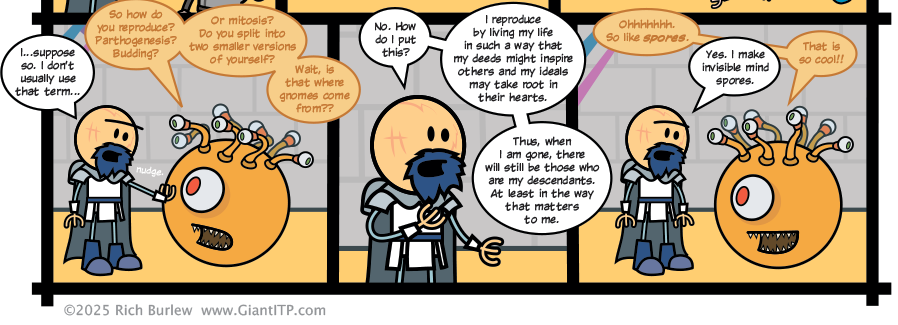 --The Order of the Stick, [_A Righteous Mushroom_](https://www.giantitp.com/comics/oots1335.html) ה׳ ברך את אברהם בכל: Avraham had been spreading a lot of invisible mind spores. And we are still benefiting from that today.