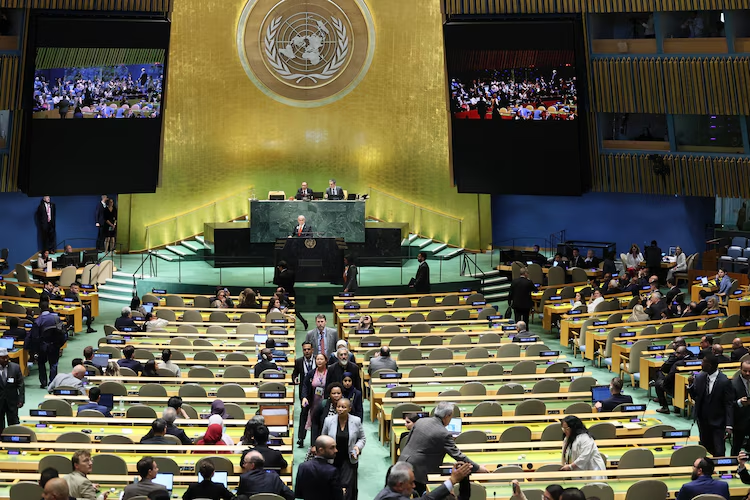
--Shannon K. Kingston, [_Delegates walk out as Netanyahu speaks at the United Nations_](https://abcnews.go.com/Politics/netanyahu-set-give-contentious-speech-united-nations/story?id=125937350)
I never mention contemporary politics, but the above image invoked a pasuk from this week's parsha:
{:he .lines}
><b>י</b> ימצאהו בארץ מדבר
ובתהו ילל ישמן;
יסבבנהו יבוננהו
יצרנהו כאישון עינו׃
<b>יא</b> כנשר יעיר קנו על גוזליו ירחף;
יפרש כנפיו יקחהו ישאהו על אברתו׃
<b>יב</b> ה׳ בדד ינחנו;
ואין עמו אל נכר׃
--דברים פרק לב
What does ה׳ בדד ינחנו mean? Specifically, who (or Who) is בדד? One possibility is that it refers to ה׳:
{:he}
><em>בדד ינחנו</em>: השם לבדו כטעם על פי ה' יחנו ויסעו ואין עם השם שותף.
--אבן עזרא, דברים לב:יב
And so all the English translations render:
>{:.displayfont}<span>Hashem</span> alone guided them, and no other power was with them.
--Artscroll Chuman, Devarim 32:12
But the word בדד doesn't really mean "alone", and it doesn't apply to ה׳.
{:he}
>כל ימי אשר הנגע בו יטמא טמא הוא; בדד ישב מחוץ למחנה מושבו׃
--ויקרא יג:מו
It means "isolated", without social contacts. Now, it may be used positively:
{:he}
>כי מראש צרים אראנו ומגבעות אשורנו; הן עם לבדד ישכן ובגוים לא יתחשב׃
--במדבר כג:ט
{:he}
>וישכן ישראל בטח בדד עין יעקב אל ארץ דגן ותירוש; אף שמיו יערפו טל׃
--דברים לג:כח
implying that they don't *need* anyone else, but it's also negative, as with the מצורע and in the נביאים:
{:he}
>כי עיר בצורה בדד נוה משלח ונעזב כמדבר; שם ירעה עגל ושם ירבץ וכלה סעפיה׃
--ישעיהו כז:י
{:he}
> לא ישבתי בסוד משחקים ואעלז; מפני ידך בדד ישבתי כי זעם מלאתני׃
--ירמיהו טו:יז
Or, most notably:
{:he}
>איכה ישבה בדד העיר רבתי עם היתה כאלמנה; רבתי בגוים שרתי במדינות היתה למס׃
--איכה א:א
So Ibn Ezra offers a second possibility for the subject of בדד:‎ עם ישראל.
{:he}
><em>בדד ינחנו</em>:...ויתכן להיות בדר על ישראל כמו הן עם לבדד ישכון.
--אבן עזרא, דברים לב:יב
{:he}
><em>ה׳ בדד ינחנו</em>: הוא מנהיג את ישראל כשהם לבדם, בבטחה ובלא הזדקקות לאחרים.
--ביאור שטיינזלץ, דברים לב:יב
The טעמים agree; there is a טפחא under ה׳'s name, implying a comma: "{:.displayfont}<span>Hashem</span>, in isolation guided them".
{:he}
>לפי רש"י מוסבת המלה "בדד" על ישראל (ושלא כרשב"ם על אתר), וטעמי המקרא מעידים כך.
--ברכת אשר על התורה, דברים לב:יב
{:he}
>ה֖׳ בד֣ד ינח֑נו וא֥ין עמ֖ו א֥־ל נכֽר׃
--דברים לב:יב
So translate it as "isolated" or even "lonely"; Rav Soloveitchik's _Lonely Man of Faith_ is איש האמונה הבודד in Hebrew.
Now, there's a possible exception to my comment, “[בדד] doesn’t apply to ה׳”:
{:he}
>בשלום יחדו אשכבה ואישן; כי אתה ה׳ לבד֑ד ל֝ב֗טח תושיבני׃
--תהילים ד:ט
The טעמים put the "comma" after לבדד, connecting it to אתה ה׳. But even here, Rashi applies it to תושיבני, to David.
{:he}
><em>לבדד לבטח</em>: כמו בֶּטַח בָּדָד עֵין יַעֲקֹב, לשון מבטח ושקט הוא, שאינו צריך להושיב גיסות עמו.
--רש״י, תהילים ד:ט
So, {:la}/pace/ Artscroll, Moshe is saying that it is *Israel* that is isolated.
In 2011, Rabbi Sacks wrote an essay entitled _A People that Dwells Alone?_, saying that we think of ourselves as isolated but we shouldn't. The Jews have allies on the international front.
>There is, in short, nothing in Judaism to suggest that it is the fate of Jews to be hated. It is neither written into the texture of the universe nor encoded in the human genome. It is not the will of G-d. Only in moments of deep despair have Jews believed this...
--Rabbi Jonathan Sacks, [_A People that Dwells Alone?_](https://rabbisacks.org/covenant-conversation/balak/a-people-that-dwells-alone/)
But by 2018, in a new essay, the question mark was gone. Even an eternal optimist like Rabbi Sacks faced that "deep despair".
>The more we succeeded in being like everyone else, implied Herzl, the more we were disliked by everyone else. Consciously or otherwise, these nineteenth century voices were echoing a sentiment first articulated 26 centuries ago by the prophet Ezekiel, speaking in the name of God to the would-be assimilationists among the Jewish exiles in Babylon:
>
>>
You say, “We want to be like the nations, like the peoples of the world, who serve wood and stone.” But what you have in mind will never happen. (Ez. 20:32)
>
...*Jews cannot cure Anti-Semitism*. Only Anti-Semites can do that, together with the society to which they belong. The reason is that Jews are not the cause of Anti-Semitism. They are the objects of it, but that is something different. The cause of Anti-Semitism is a profound malaise in the cultures in which it appears.
--Rabbi Jonathan Sacks, [_A People that Dwells Alone_](https://rabbisacks.org/covenant-conversation/balak/people-dwells-alone/)
So Rabbi Sacks concludes with the Netziv, that our destiny is to live among the nations but to be, always, different.
{:he}
><em>ה׳ בדד ינחנו</em>: הוליכם במדבר למען העמידם על צורת עם ישראל...להיות בדד שלא להיות מעורב עם אוה״ע יותר מן ההכרח.
--העמק דבר, דברים לב:יב
As Rav Lichtenstein says,
{:he}
>במסגרת זו יש הקוראים לעזיבת תרבותו המיוחדת של עם ישראל, שהיא כביכול צרה ומצומצמת, ואימוץ תפיסות אוניברסאליות ומודרניות יותר. מעבר לכך, ישנם מנהיגים המדברים על "מזרח תיכון חדש", שבו תשתלב מדינת ישראל ותיטמע בנוף הכללי הגדול של האזור.
>
הצעה זו היא בלתי אפשרית. מדינת ישראל יכולה אמנם לשתף פעולה עם מדינות אחרות בתחומים שונים, אולם לעולם לא תצליח להיטמע ממש בין שכנותיה, כיוון שייחודו הבסיסי של עם ישראל בין האומות אינו מאפשר את הדבר.
>
למעשה, ייחודו של עם ישראל בין האומות, שתואר ע"י בלעם, הוא הסיבה לכך שבלעם לא הצליח לקלל את ישראל. עם ישראל אינו מושפע מקללות כאלו, כפי שאינו מושפע מכללי ההסטוריה הרגילים. הוא מושגח רק ע"י הקב"ה בעצמו.
>
ייחודו של עם ישראל בין העמים קיים, אפוא, הן בהווה והן באחרית הימים, הן במובן ההסטורי והן במובן המטא-הסטורי: ”הן עם לבדד ישכֹּן, ובגוים לא יתחשב“.
--הרב אהרן ליכטנשטיין, [_הן עם לבדד ישכון_](https://etzion.org.il/he/tanakh/torah/sefer-bamidbar/parashat-balak/balak-nation-dwells-alone)
> But let the words of Netziv stay with us. We should never abandon our distinctiveness. It is what makes us who we are. Nor is there any contradiction between this and the universalism of the prophets. To the contrary--and this is the life changing idea: In our uniqueness lies our universality. *By being what only we are, we contribute to humanity what only we can give*.
--Rabbi Jonathan Sacks, [_A People that Dwells Alone_](https://rabbisacks.org/covenant-conversation/balak/people-dwells-alone/)
ה׳ בדד ינחנו is both a fact about our past and the destiny of our future.