This week we are going to study vexillology.
>Vexillology is the study of flags--their history, design, symbolism and use...a {:la}/vexillum/ is a Roman military standard...
>
Good flag design follows a few key principles:
>
>- simplicity--easy to recognise and reproduce
- meaningful symbolism--colours and shapes with a purpose
- limited colours--typically two to four strong, contrasting colours
- no letters, badges or seals--clarity is vital
- distinctiveness--easy to distinguish from other flags
--The Flag Institute, [_About Vexillology_](https://www.flaginstitute.org/wp/about/about-vexillology/)
>Flags were originally intended to distinguish friend from foe on the battlefield. To serve this purpose, they ought to be easily distinguishable from far away, through smoke, dust, etc. There’s no way anyone could read text in these conditions.
>
Sometimes your militia will need Betsy Ross--a random seamstress without fancy equipment--to sew them a flag out of bedsheets. Your flag should be simple enough that Betsy can do a good job.
>
Patriotic young children will sometimes want to draw flags, and we should let them. This means no complex shapes that a child would get wrong.
--Scott Alexander, [_Three Model Organisms For Taste_](https://www.astralcodexten.com/p/three-model-organisms-for-taste)
This week's parsha introduces the flags of the camps of Israel.
{:he}
><b>א</b> וידבר ה׳ אל משה ואל אהרן לאמר׃
<b>ב</b> איש על דגלו באתת לבית אבתם יחנו בני ישראל; מנגד סביב לאהל מועד יחנו׃
<b>ג</b> והחנים קדמה מזרחה דגל מחנה *יהודה* לצבאתם; ונשיא לבני יהודה נחשון בן עמינדב׃
...<b>ה</b> והחנים עליו מטה יששכר; ונשיא לבני יששכר נתנאל בן צוער׃
...<b>ז</b> מטה זבולן; ונשיא לבני זבולן אליאב בן חלן׃...
>
<b>י</b> דגל מחנה *ראובן* תימנה לצבאתם; ונשיא לבני ראובן אליצור בן שדיאור׃
...<b>יב</b> והחונם עליו מטה שמעון; ונשיא לבני שמעון שלמיאל בן צורישדי׃
...<b>יד</b> ומטה גד; ונשיא לבני גד אליסף בן רעואל׃...
>
<b>יח</b> דגל מחנה *אפרים* לצבאתם ימה; ונשיא לבני אפרים אלישמע בן עמיהוד׃
...<b>כ</b> ועליו מטה מנשה; ונשיא לבני מנשה גמליאל בן פדהצור׃
...<b>כב</b> ומטה בנימן; ונשיא לבני בנימן אבידן בן גדעני׃...
>
<b>כה</b> דגל מחנה *דן* צפנה לצבאתם; ונשיא לבני דן אחיעזר בן עמישדי׃
...<b>כז</b> והחנים עליו מטה אשר; ונשיא לבני אשר פגעיאל בן עכרן׃
...<b>כט</b> ומטה נפתלי; ונשיא לבני נפתלי אחירע בן עינן׃
--במדבר פרק ב
{:he}
><em>באתת</em>: סימנין היו לכל נשיא ונשיא מפה וצבע על כל מפה ומפה כצבע של אבנים טובות שהיו על לבו של אהרן, מהם למדה המלכות להיות עושין מפה וצבע לכל מפה ומפה.
--במדבר רבה ב:ב
{:he}
><b>טו</b> ועשית חשן משפט מעשה חשב כמעשה אפד תעשנו; זהב תכלת וארגמן ותולעת שני ושש משזר תעשה אתו׃...<b>יז</b> ומלאת בו מלאת אבן ארבעה טורים אבן; טור אדם פטדה וברקת הטור האחד׃ <b>יח</b> והטור השני נפך ספיר ויהלם׃ <b>יט</b> והטור השלישי לשם שבו ואחלמה׃ <b>כ</b> והטור הרביעי תרשיש ושהם וישפה; משבצים זהב יהיו במלואתם׃ <b>כא</b> והאבנים תהיין על שמת בני ישראל שתים עשרה על שמתם; פתוחי חותם איש על שמו תהיין לשני עשר שבט׃
--שמות פרק כח
The midrash gives the details of these flags, with the symbols based on each tribe's history.
{:he .lines}
>ראובן אבנו אדם ומפה שלו צבוע אדם ומציר עליו דודאים...
יהודה נפך וצבע מפה שלו דמותו כמין שמים ומציר עליו אריה [(בראשית מט:ט) גּוּר אַרְיֵה יְהוּדָה]...
דן לשם וצבע מפה שלו דומה לספיר ומציר עליו נחש על שם (בראשית מט:יז): יְהִי דָּן נָחָשׁ...
יוסף שהם וצבע מפה שלו שחר...ומציר לשני נשיאים אפרים ומנשה...ועל מפה של אפרים היה מציר שור על שם (דברים לג:יז): בכור שורו...ועל מפה שבט מנשה היה מציר ראם על שם (דברים לג:יז): וקרני ראם קרניו.
--במדבר רבה ב:ב
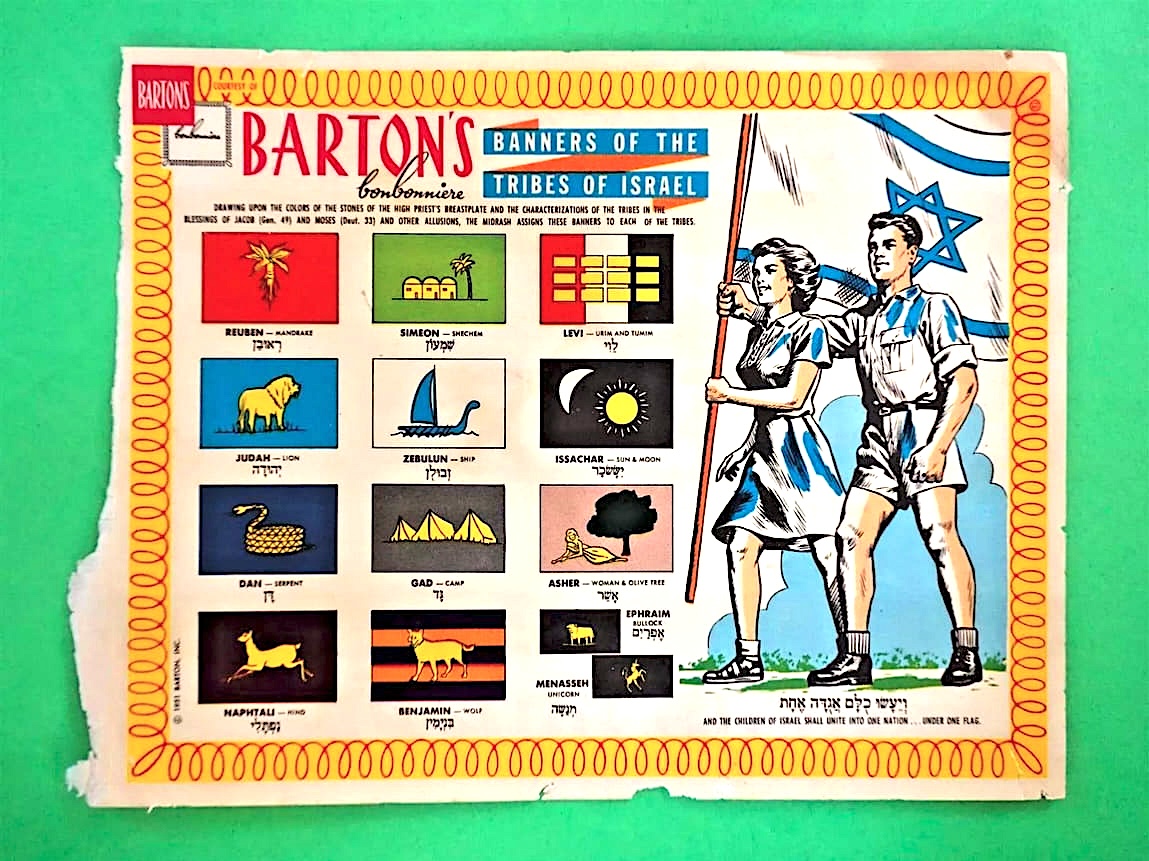
--Barton's candy box insert, from [CRW flags](https://www.crwflags.com/Fotw/images/i/il_tribes.jpg)
We are going to focus on the primary flags, of the four camps, with symbols of mandrake, lion, bull and snake.
{:he}
>הדגלים לדעתי היו ארבעה בלבד והאותות שהיו צבועים בהם היו ארבעה.
--אברבנאל, במדבר ב:א
But we have other interpretations of these symbols.
{:he}
><em>באתת</em>: סימנים היו בכל דגל ודגל. וקדמונינו אמרו שהיה בדגל ראובן צורת אדם מכח דרש דודאים, ובדגל יהודה צורת אריה כי בו המשילו יעקב, ובדגל אפרים צורת שור מטעם ”בכור שור“, ובדגל דן צורת נשר; עד שידמו לכרובים שראה יחזקאל הנביא.
--אבן עזרא, במדבר ב:ב
The vision of יחזקאל הנביא was מעשה מרכבה, the image of the כרובים carrying the כסא הכבוד. And they had the faces of four creatures.
{:he}
><b>ג</b> היה היה דבר ה׳ אל יחזקאל בן בוזי הכהן בארץ כשדים על נהר כבר; ותהי עליו שם יד ה׳׃
...<b>ה</b> ומתוכה דמות ארבע חיות; וזה מראיהן דמות אדם להנה׃
<b>ו</b> וארבעה פנים לאחת; וארבע כנפים לאחת להם׃
...<b>י</b> ודמות פניהם פני אדם ופני אריה אל הימין לארבעתם ופני שור מהשמאול לארבעתן; ופני נשר לארבעתן׃
...<b>כו</b> וממעל לרקיע אשר על ראשם כמראה אבן ספיר דמות כסא; ועל דמות הכסא דמות כמראה אדם עליו מלמעלה׃
--יחזקאל פרק א
And that is the "meaningful symbolism": the camp of Israel *is* the כרובים who carry the שכינה.
{:he}
>כשבאו אל הר סיני ועשו המשכן ושב הקדוש ברוך הוא והשרה שכינתו ביניהם אז שבו אל מעלת אבותם, שהיה סוד א־לוה עלי אהליהם, והם הם המרכבה (בראשית רבה מז:ח), ואז נחשבו גאולים ולכן נשלם הספר הזה בהשלימו ענין המשכן ובהיות כבוד ה׳ מלא אותו תמיד.
--רמב״ן הקדמה לספר שמות
So the flags symbolized both the past history and the future role of the שבטים. But mandrake\/lion\/ox\/eagle isn't the same as human\/lion\/ox\/snake.
In <//פרשת ויצא תשפ״ב> we talked about the דודאים as mandrakes, with a human-shaped root (hence Ibn Ezra's צורת אדם מכח דרש דודאים). And if the flags had “no complex shapes that a child would get wrong” then I have no problem saying a stylized mandrake would be the same image as a stylized person. But נשר--poetically translated "eagle" but the actual bird was a vulture--is not the same as a נחש. Or is it?
{:he}
>...<em>ובצורת דגל דן נשר</em>:...ואע"פ שמצינו בתרגום יונתן שאומר שבצורת דגל דן היה נחש, מצאתי בציוני במקום אחר שכתב: המקובלים כתבו שהגוף היה צורת נחש, שרומז למקומו שנאמר ”יהי דן נחש“, והכנפים כנפי נשר...הרי היו מצויירים בדגלים ד' חיות הנושאות הכסא.
--שני לוחות הברית, תורה שבכתב , במדבר י״ח
And a stylized snake with wings certainly could look like a vulture.
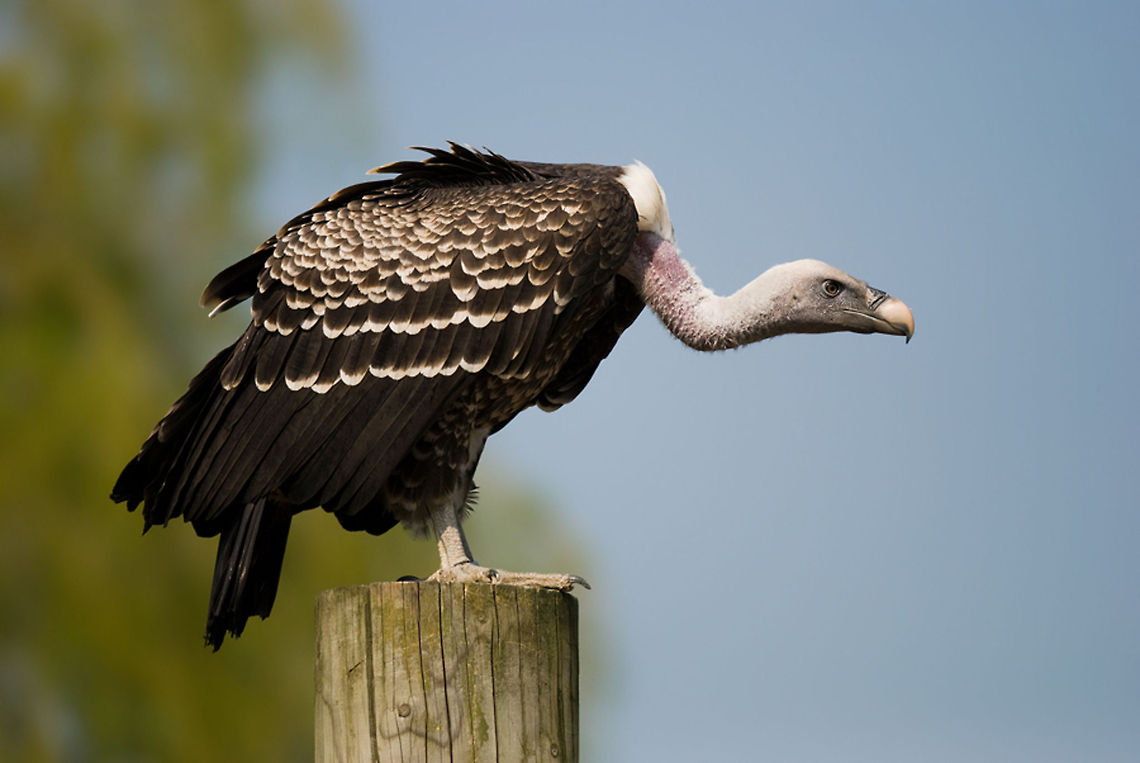
--[Rüppell's griffon vulture](https://nationalzoo.si.edu/animals/ruppells-griffon-vulture)
So, what do we call a snake with wings and legs?
>Although the wombat is real and the dragon is not, nobody knows what a wombat looks like and everyone knows what a dragon looks like.
--Avram Davidson, [_Adventures in Unhistory_](https://avramdavidson.com/product/adventures-in-unhistory/), p. 207
{:he}
>ובדגל דן היה צורת נשר מפני שיעקב דימהו לנחש שהוא שְׁפִיפֹן עֲלֵי אֹרַח ויש לו כנפים לעוף והוא היותר תקיף שבמינו והוא *הדרקון* וכמו שאמר (ישעיהו יד:כט)[אַל תִּשְׂמְחִי פְלֶשֶׁת...] כִּי מִשֹּׁרֶשׁ נָחָשׁ יֵצֵא צֶפַע וּפִרְיוֹ שָׂרָף מְעוֹפֵף.
----אברבנאל, במדבר ב:א
----
Ilia Rodov is the head of the Department of Jewish Art at Bar Ilan University. He notes that Ashkenazi synagogues and /sefarim/ often used animal images; Artscroll still has lions on the cover of the Stone Chumash. Often, those images include dragons.
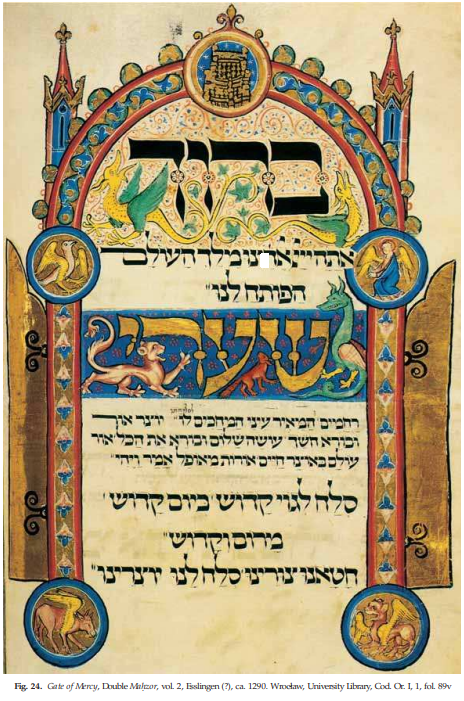
--Figure 24 from Ilia Rodov, [_Dragons: A Symbol of Evil in European Synagogue Decoration?_](https://www.academia.edu/469713/Ilia_Rodov_Dragons_A_Symbol_of_Evil_in_Synagogue_Decoration_Ars_Judaica_1_2005_63_84)
Rodov is convinced that the dragons are symbols of evil.
>It would seem that the dragons under the
portal, just as the dragon on the base of a synagogue
column, allude to the malevolent persecutors who
threaten the Jewish people, but are defeated by the Torah...
>
Dragons on the synagogue ark, a
symbolic substitute for the Ark of the Covenant that
corresponds to the celestial divine throne, delineated a
similar idea of evil unceasingly challenging G-d’s almighty
power...
>
The
dragons in Hebrew illuminated manuscripts reflect a
further evolution of the image from a symbol of defeated
evil to a more dramatic concept of G-d’s malevolent
adversary attempting to obstruct the relationship between
G-d and man. The message of the paintings is that
devotion and faith will neutralize Satan, but evil will be
finally destroyed only in the messianic age.
--Ilia Rodov, [_Dragons: A Symbol of Evil in European Synagogue Decoration?_](https://www.academia.edu/469713/Ilia_Rodov_Dragons_A_Symbol_of_Evil_in_Synagogue_Decoration_Ars_Judaica_1_2005_63_84)
I hate to argue with a PhD in Art History, but that's wrong. The dragons are like the lions, the כרובים that carry the מרכבה, symbols of the Jewish people who bear the שכינה in the world. All these creatures are variations on the כרובים; they weren't "cherubic".
{:he}
><em>כרבים מעשה חשב</em>: כרובים היו מצויירין בהם באריגתן...פרצוף אחד מכאן ופרצוף אחד מכאן, ארי מצד זה ונשר מצד זה.
--רש״י, שמות כו:א
----
But still, the נחש is a pretty negative symbol. You aren't supposed to have images of snakes (or dragons)
{:he}
>מעשה בקולוניא שצרו בחלונות של ביהכנ"ס צורות אריות ונחשים. ושאלו להרב ר' אליקים זצ"ל והשיב הוזהרנו בדבור שני מלעשות כן דכתיב (שמות כ:ג) לֹא תַעֲשֶׂה לְךָ פֶסֶל [וְכׇל תְּמוּנָה]...והתנן (משנה עבודה זרה ג:ג) המוצא כלים ועליהם צורת חמה ולבנה *וצורת דרקון* יוליך לים המלח...ונחש בכלל דרקון הוא ואסור לעשותו.
--אור זרוע, חלק ד, פסקי עבודה זרה ר״ג
So why is Dan a eagle-vulture-snake-dragon? What is the story of שבט דן?
He started as the smallest tribe, with just one son:
{:he}
>ובני דן חשים׃
--בראשית פרק מו:כג
And he is considered the least important of the שבטים:
{:he}
><b>א</b> וידבר ה׳ אל משה לאמר׃
<b>ב</b> ראה קראתי בשם בצלאל בן אורי בן חור למטה יהודה׃
...<b>ו</b> ואני הנה נתתי אתו את אהליאב בן אחיסמך למטה דן ובלב כל חכם לב נתתי חכמה; ועשו את כל אשר צויתך׃
--שמות פרק לא
{:he}
><em>ואהליאב</em>: משבט דן, מן הירודין שבשבטים מבני השפחות, והשוהו המקום לבצלאל למלאכת המשכן, והוא מגדולי השבטים, לקיים מה שנאמר (איוב לד:יט) וְלֹא נִכַּר שׁוֹעַ לִפְנֵי דָל.
--רש״י, שמות לה:לד
But by the time of יציאת מצרים Dan was the *largest* tribe: (במדבר ב:כו)‎ שנים וששים אלף ושבע מאות. But they were still the last in line:
{:he}
>ונסע דגל מחנה בני דן *מאסף לכל המחנת* לצבאתם; ועל צבאו אחיעזר בן עמישדי׃
--במדבר י:כה
But they used their status as the last for a positive purpose:
{:he}
><em>מאסף לכל המחנות</em>: תלמוד ירושלמי: לפי שהיה שבטו של דן מרובה באוכלוסין היה נוסע באחרונה וכל מי שהיה מאבד דבר היה מחזירו לו.
--רש״י, במדבר י:כה
>In the encampment in the Midbar, Dan was the last tribe to move. It was Dan’s job to gather in those people who fell behind. This applied not just on a physical level:
>
People whose spiritual level had dropped and who therefore lagged behind their own tribe could be absorbed into Dan, who would then raise their /madreigah/, enabling them to return to their rightful place.
--Shira Smiles, [_Grasp the Light_](http://www.mishpacha.com/Browse/Article/9360/Grasp-the-Light)
Why does Dan merit to be the largest tribe? because his is the only tribe that doesn't divide into separate בתי אב. Even as they enter ארץ ישראל, they are all one family.
{:he}
> אלה בני דן למשפחתם לשוחם משפחת השוחמי; אלה משפחת דן למשפחתם׃
--במדבר כו:מב
{:he}
>כאן גלתה לנו התורה,כי אין חכמה ואין עצה לנגד ה׳.
לבנימין היו עשרה בנים...ולדן--רק בן אחד,
חושים בן דן...ואעפ״כ עלתה לו שהוא היה מרובה באוכלוסין מבנימין.
--<a href="http://www.hebrewbooks.org/pdfpager.aspx?req=38071&pgnum=164">חפץ חיים על התורה, פנחס</a>
Dan was the מאסף, the tribe that didn't reject anyone. We all one family, one people. Dan realized that you could put wings on a snake and even the נחש could carry the כסא הכבוד.
{:he}
>המקובלים כתבו שהגוף היה צורת נחש...והכנפים כנפי נשר שמורים רחמים, שנאמר (דברים לב:יא) [כְּנֶשֶׁר] יָעִיר קִנּוֹ [...יִפְרֹשׂ כְּנָפָיו יִקָּחֵהוּ].
--שני לוחות הברית, תורה שבכתב , במדבר י״ח